

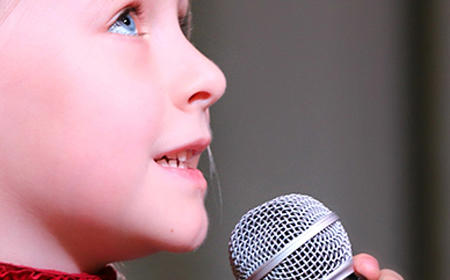
Speech therapy is an intervention which aims at enhancing a child's speech skills and abilities to understand and express language, including nonverbal language.
What is Speech Therapy?
Quite simply put, Speech therapy is an intervention service, for speech and language disorders.
In children who have difficulties communicating their wants and needs, either verbally, or nonverbally, speech therapy not only works on training the mouth to create sounds that form words and sentences, in order to address articulation, fluency, and voice volume regulation, but also, understanding and expressing language in order to address the use of language through written, pictorial, body, and sign forms. It also encourages the use of language through alternative communication systems.
Does my child need Speech Therapy?
If your child does not meet the age appropriate milestones of speech, language, and communication, despite normal audiology testings, you may be advised to visit a speech therapist
This brings us to charting out age appropriate milestones for speech and language development.
| Age | Hearing and Understanding | Speaking |
|---|---|---|
0–3 Months |
|
|
4–6 Months |
|
|
7 Months–1 Year |
|
|
1-2 years |
|
|
2-3 Years |
|
|
3-4 Years |
|
|
4-5 Years |
|
|
How does Speech Therapy help my child with Autism?
The ultimate objective of speech therapy is to improve the communication skills of your child on the Autism spectrum, which is associated with symptoms that do impair his/her language and communication skills. To understand how Speech Therapy for Autism works, it is important to know that language is used to communicate our feelings, thoughts and needs with other people. Language can be either communicated verbally or non-verbally.
Speech is essentially, the physical production which make use of the oral muscles and the coordination between them to express the ideas, thoughts and feelings. Speech therapy focuses on developing the language as well as speech aspects, and therefore, would work towards uplifting these areas by means of exercises and activities, so as to enhancing the overall communicative ability, which in turn boosts your child’s cognitive capacity on a whole.
Speech therapy can directly benefit your child in the ability to understand and express their thoughts, ideas and feelings, through intelligible speech, along with an increased ability to solve problems, in an independent environment, which makes them school-ready. Speech therapy also can help with improved swallowing.
Speech therapy has a great effect on pre-literacy skills, vocal quality, fluency of speech, and the development of practical social skills. This could help your child achieve a better quality of life, build a greater self-esteem, and thus, increased independence.
Speech and language are two individual, but related components of communication. Speech therapy also helps with communication, which would help your child convey the ideas in his/her mind, either verbally or nonverbally.
What does Speech Therapy include?
Speech therapy includes various techniques, exercises, activities and aids, which work towards improving coordination of speech muscles through strengthening and coordination exercises, sound repetition and imitation.
Speech therapy techniques might include:
Electronic "talkers"
Signing or typing
Picture exchange communication systems that start out using pictures instead of words to help your child learn to communicate. This can be done by the means of aids such as picture boards with words.
Using sounds to which a person is over- or under-sensitive to expand and compress speech sounds
Improving articulation of speech by massaging or exercising lips or facial muscles
Having individuals sing songs composed to match the rhythm, stress, and flow of sentences
Some of these techniques are supported more by research than others. Be sure to discuss them thoroughly with your speech-language pathologist and your child's pediatrician.
Benefits have also been seen by a treatment philosophy called Social Thinking. It teaches children about the relationship between how we think and behave, and how others respond to us. Your speech language pathologist also might bring out some blow toys and whistles and have "blow the cotton ball" relay races to strengthen muscles used in speech and eating. There are what may seem like more fun strategies to help children tolerate different sensations in their mouths, such as, Using crazy straws, a toothbrush that makes music, and blowing bubbles.
How often does my child need Speech Therapy?
Your Speech Therapist may suggest the therapies to be conducted at least 2-3 times per week. Our database can be used to find a speech language pathologist based on city, state, and country. They normally work in close association with the occupational therapist and pediatrician.
At what age should I start Speech therapy for my child?
Speech therapy can be started as soon as a child starts exhibiting the communication and language symptoms of autism.
Who can provide Speech Therapy for my child?
Speech Therapy for Autism is performed by a qualified the Speech Language Pathologist who collaborates with other professionals to modify and make efficient, the flow of messages and exchange of information from one person to another.
Can I use Speech Therapy at home with my child; if so, how?
As a parent, the best thing you can do is work in close association with the speech therapist, as well as occupational therapist to find ways to continue doing some vocal, communication, or mouth exercises at home.
Moreover, it is important to be aware of the benefits of speech therapy and keep the therapist updated of the noticeable gains.
You can find below, strategies of teaching communication skills to children with Autism with the help of a visual table.
| Pre-linguistic Skills (the skills required for language development) | Receptive Skills (understanding/comprehension) | Expressive Skills: (conveying needs/wants) |
|---|---|---|
|
Always hold the object or picture card at your eye level while showing it to the child, so that the child looks at the object or picture and then looks into your eyes while you say the name of the item. Always raise your hand at the child's eye level while asking for any object or picture from the child. Always gain the child's attention and eye contact towards you and then speak to the child. |
To teach comprehension/ understanding of simple unidirectional (one-step) commands.
|
To encourage production of vocal play sounds. Teach the child to imitate vocal play sounds like animal sounds and vehicle sounds. - How does a dog bark? /Bow Bow/ - What does a cat say? Meow - What does a cow say? Mooo..., etc. - How does the horn of car sound? /pip pip/ - How does horn of train sound? /kuuu.../, etc. To teach use of objects to the child using pictures or real objects. In what do you drink water? Glass With what do you brush your teeth? Toothbrush With what do you have bath? Soap, etc. |
Nonverbal communication of your child:
Voice accompanied by body languages makes it easier for the children on the autism spectrum to understand. Gestures and eye contact can build the foundation for language development. The usage of gestures should be done in a way so that the child can easily imitate them.
For example, nodding of head, point out a particular items, etc.
Response time of your child:
Allow your child to speak, by giving ample response time. It's a human tendency to feel the need to fill in for your child when s/he doesn't respond spontaneously. However, it is essential to always give your child lots of opportunities to respond, even if the child isn't speaking. When you ask a question see that it is answered by the child verbally or nonverbally.
Commenting about what your child does:
Sometimes to engage with your child, you may direct the activities towards that of your child's interest. While communicating with your child, make it a point to associate vocabulary with his/her area of interest such as narrating what the child is doing, naming the things used by him/her for playing so that he/she doesn't get restless.
Talking to your child about what engages him/her will help him/her to learn vocabulary easier, and help alleviate his/her communication problems with autism. Engaging in a range of activities that are of your child's interest such as: building blocks, floor activities, coloring/painting with constant stimulation from you as a parent can contribute largely to your child's development.
Social interaction/play with your child:
One of the most convenient ways for your child to learn communication is through interactive play and social interaction. This helps in teaching communication skills to children with autism as it provides opportunities for your child to develop communication initiation and is tempted to interact. Some of the activities that you can do with your child is to perform pretend play such as: doctor set/kitchen set pretend play, flipping through a book with your child, playing at the park, engaging your child with peers at the park.
Use of visual supports:
Training the child with visual support can foster speech and language development. Some examples include visual time tables, pictorial representations of animals, numbers, fruits, vegetables. Using picture boards for sorting and matching can assist in developing receptive and expressive language skills.
Reward your child:
Provide a reinforcement to your child when a certain target has been achieved. (Eg: your child has earned 5 stars for the day, reward them with an item of their liking). This will encourage the developing milestones to occur more often and consistently.
These are some of the stimulation techniques that can be used in teaching communication skills in your child with Autism. As parents, you may employ any technique or a combination of techniques to assist your child's language development.