
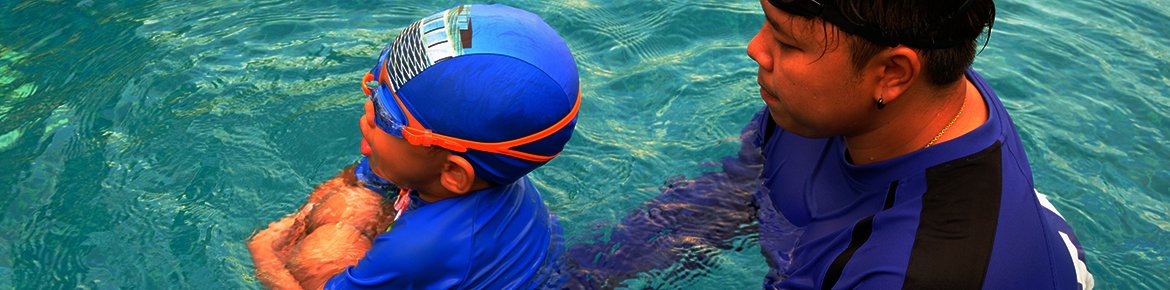
Among the field of alternative or complementary treatment modes for Autism, Aquatic therapy holds a strong foot holding. According to the Aquatic Physical Therapy Section of the American Physical Therapy Association, aquatic therapy or aquatic physical therapy (APT) is "the evidence-based and skilled practice of physical therapy in an aquatic environment by a physical therapist."
APT includes "treatment, rehabilitation, prevention, health, wellness, and fitness of the patient/client population in an aquatic environment with or without the use of assistive, adaptive, orthotic, protective, or supportive devices and equipment."
How does Aquatic Therapy benefit my child with Autism?
Aquatic therapy entails benefits for the brain and learning, psychological and behavioral benefits, and beneficial effects on joint position sense and muscle coordination.
Inappropriate or exaggerated responses of anxiety to any unpleasant stimuli in children with Autism spectrum disorders are believed to be due to an autonomic nervous system dysfunction causing an over arousal of sympathetic nervous system and a depression of the parasympathetic nervous system. Such an altered autonomic nervous system function is thought to be one of causal factors in Autism Spectrum disorders.
An increased blood supply to brain and cardiac systems also leads to the activation of the parasympathetic nervous system and suppression of the sympathetic nervous system; after immersion in water. Mere immersion in water therefore helps reduce anxiety, hyperactivity, repetitive motor mannerisms, stereotypical behavioral and inappropriate emotional responses. Water immersion results in calming of the children on spectrum.
Buoyancy and upthrust experienced in water provides freedom of movement, which is lacking on land due to poor motor planning and coordination and increased risk of fall. Water supports the child but at the same time creates a relatively unstable environment providing vestibular inputs. Viscosity of water combined with hydrostatic pressure provides proprioceptive inputs. These are crucial in addressing the low tone and incoordination in these children.
Shoulder or Neck deep immersion increases the cardiac output and also created a larger pressure gradient in the blood pumped out and the blood vessels of brain, thereby increasing the blood supply to the brain. Increased blood supply means that brain receives nutrients much more efficiently and the toxic waste is taken away quickly. Water immersion therefore has a beneficial effect for memory and cognitive tasks
When can I start Aquatic Therapy, and who should I do it from?
An aquatic therapy session can be conducted as an individual session or group therapy session. Group therapy sessions are particularly beneficial for improving the social skills and behavioural issues in children. A detailed assessment should be duly undertaken before the session. Building a rapport with the child on land before entering into the alien water environment is essential.
It should only be performed by a licensed therapist. There are various techniques that a therapist may utilize during these sessions. Some of the common concepts in aquatic therapy are Halliwick Therapy which uses a 10 point program to increase the water adaptability, breath control and movement of the body when immersed in water. Bad Ragaz Ring method is essentially used for motor system deficits like low tone, muscle weakness and incoordination. Ai chi (Water Tai Chi) uses various postures and movements in water which provide active relaxation whereas Watsu is a technique used for passive relaxation while in water. Various aquatic exercises can be used for building the aerobic endurance. Aquatic therapist will make use of all of these techniques in combination for optimum results.
The time duration for the aquatic program is predetermined. Ideally an aquatic therapy program for ASD should be for about 2-6 months with a frequency of 1-3 times per week. Our database has contact details for aquatic therapists sorted by country, state, and city.
What can I do at home with my child?
Since aquatic therapy is associated with exercises to be done in the water, normally, there is not much you can do at home. However, the parent can work in close association with the aquatic therapist as well as the occupational therapist to find out of any exercises that can be done to enhance the therapy being given to the child.