
28 Sep 2026
How to Maximize Your Focus at Work and School When You Have ADHD
Sitting down to work on a report or study for an exam sounds simple enough. For someone with ADHD, though, it can feel like trying to read a book […]

Children who are diagnosed with Autism are known to have other co-existing problems. A thorough evaluation is needed to rule out whether the comorbidity is directly associated with ASD or is altogether a different condition in the child.
Children with autism are more likely to have issues of the gastrointestinal system affecting digestion and elimination. Data from a study by Loening-Baucke (1998) reported that 16-37% of children with autism have constipation. However, when looked at otherwise, no child with chronic diarrhoea, stomach cramps and nausea will learn, behave or socialize well. By treating gastrointestinal problems, we can help these children become more receptive to school, therapy and social interaction.
The above problems superimposed over the primary symptoms of autism, your child’s ability to interact socially, behave acceptably, learn, communicate or play actively may be further affected. They must be monitored and treated appropriately by the concerned medical professionals. Some of the above-mentioned problems could bring embarrassment to you and also affect your sociability.

It is often observed that adults or children with Autism display obsessive compulsive behaviors, for e.g. lining or arranging objects in a particular way. Children with Autism usually have repetitive, preservative thoughts that are intense in nature, much like children with purely OCD symptoms. However, the difference is that children purely with OCD do not like the experience of having repetitive thoughts and would do anything to get rid of the thoughts (such as washing one’s hands multiple times).
A child with Autism generally finds comfort in obsessive or repetitive behaviour and may spend a good amount of time and energy in doing that (such as transferring toys from one box to another or lining up toys or any objects).

Tuchman (2006) estimated that 25 % of individuals with Autism also develop seizures. These seizures may be observed either in childhood or during puberty andmay have been triggered due to hormonal changes in the body. Seizures can range from mild (where the person would be gazing into space for a few seconds) to a severe episode (featuring large jerky movements of the whole body for several minutes). Doctors usually prescribe drugs to control the seizure activity or frequency. However, it is very important that the child undergoes regular health checkups as these drugs could have harmful side-effects.
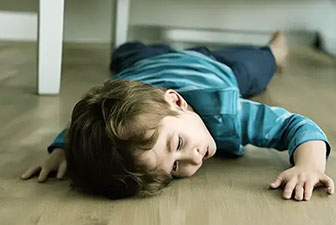
Mood disorders are characterized by inappropriate or uncontrolled mood changes. There are many studies which have indicated that individuals with Autism are at an increased risk of developing mood disorders, particularly depressive disorder. As people with ASD may face a number of negative life events such as bullying and poor social acceptance, especially during adolescent years. Such experiences may increase the risk of developing depressive disorder.
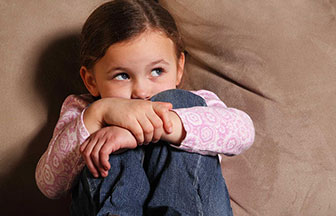
Many individuals with autism have sleep problems. The biggest sleep problems among these children include difficulty falling asleep, inconsistent sleep routines, restlessness or poor sleep quality, waking early and waking frequently. These problems affect the overall health of the child and are associated with the child’s aggression, depression, hyperactivity, increased behavioral problems, irritability and poor learning and cognitive performance. As parents, you may also be exhausted due to sleep deprivation.

Children with Autism learn differently and are often diagnosed with learning disabilities like dyslexia. A few others may have unusual abilities such as hyperlexia i.e. the ability to read at very young age. Some have exceptional mathematical abilities and fall under the “savants” category, while others have a tough time gaining mathematical skills.

30 % of children with Autism have moderate to severe Pica. Pica is characterized by an appetite for substances that are largely inedible and non-nutritive, such as hair, paper, drywall or paint, metal, stones or soil, glass, faeces and chalk. These actions persist for more than one month at an age where eating such objects is considered developmentally inappropriate, not part of culturally sanctioned practice and is very severe. It can lead to intoxication in children, which can result in an impairment of both physical and mental development. In addition, it can also lead to surgical emergencies due to an intestinal obstruction as well as more subtle symptoms such as nutritional deficiencies and parasitosis. Pica has been linked to other mental and emotional disorders. Stressors such as emotional trauma, maternal deprivation, family issues, parental neglect, pregnancy, and a disorganized family structure are strongly linked to pica as a form of comfort.
Find lots of insights and information on our blog
28 Sep 2026
Sitting down to work on a report or study for an exam sounds simple enough. For someone with ADHD, though, it can feel like trying to read a book […]

09 Sep 2026
A few years ago, parents seeking answers about autism had to rely on doctors, therapists, books, and support groups. Today, information is available within seconds. A quick scroll through Instagram, […]

27 Aug 2026
For most of my life, I knew I was different. I just didn’t know there was a name for the difference. I learned how to function by watching other people. […]

25 Aug 2026
For many parents, bedtime does not always mean the end of the day. Sometimes, it means another few hours of negotiating, waiting, comforting, answering questions, managing screens, dealing with […]

04 Aug 2026
When Your Autistic Teen Says, “I Have No Friends”: A Parent’s Guide to Building Real Connections Teenage years can be socially difficult for many young people. Autism and friendships during […]

22 Jul 2026
Communication doesn’t look the same for every single child. For many kids on the autism spectrum, turning thoughts into spoken words can feel like climbing a steep mountain. Some children […]